The news page of the archived Westcountry Organics site collected articles that its owners found relevant to organic food. Three items are summarised below. All of them date from the early 2000s, so the figures and policy details reflect that time, and the views belong to the original authors.
Report of gene transfer to a weed
The first headline said that the first officially confirmed case of gene transfer had been reported in Canada. According to the summary, this undermined an argument made by biotechnology firms that engineered crops could cut herbicide use. It also raised the possibility of “superweeds” resistant to many common herbicides. The archive carried only a teaser, so the details of the case are not known from the page.
A study on mineral content
A second item described researchers at Rutgers University who set out to test the slogan that organic is better. They bought produce from supermarkets and health-food shops and analysed it for mineral content. The headline claimed that organic food showed “superior nutritive value”. This is a claim reported by the archive; nutrition studies of this kind remain debated, and readers should consult current scientific reviews.
“Are we abandoning the countryside?”
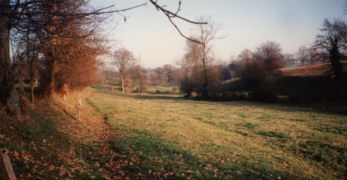
The longest article was an essay by Ralph Crathorne, then head of the land research group at property consultancy Strutt and Parker. His central point was that a large and growing area of British farmland was going out of production.
- Scale. The essay said more than a million hectares, roughly five times the size of Warwickshire, had left farming since 1990, while average farm income per head had fallen dramatically over five years.
- Where it went. It listed set-aside land funded by the EU, land lost to housing, land overtaken by bracken, and land entering a farm woodland scheme. It also noted livestock culled during the foot and mouth outbreak, leaving pastures in limbo.
- Not just remote places. The author remarked that abandoned land could be found even beside London’s orbital motorway.
- Impact. The main short-term casualty, he wrote, is the landscape: scrub and weeds take over quickly, and reversing it is costly. Conservation bodies warned that losing grazing would harm butterflies and other wildlife.
- Buyers. The National Trust and the RSPB were cited as acquiring land and flocks, which the author saw as a silver lining for the value of the remaining farmland.
The policy proposals in the essay are covered on the organic news page.
Why it is here
Organic supporters often argue that farming has an important role in managing landscapes and wildlife. This archive gives one example of how that argument was made at the time. For related background, read about organic farming and GM food.